


The Smart Factory: An Introduction to the Transformative Industrial AI Industry
The Dawn of the Intelligent Industrial Revolution
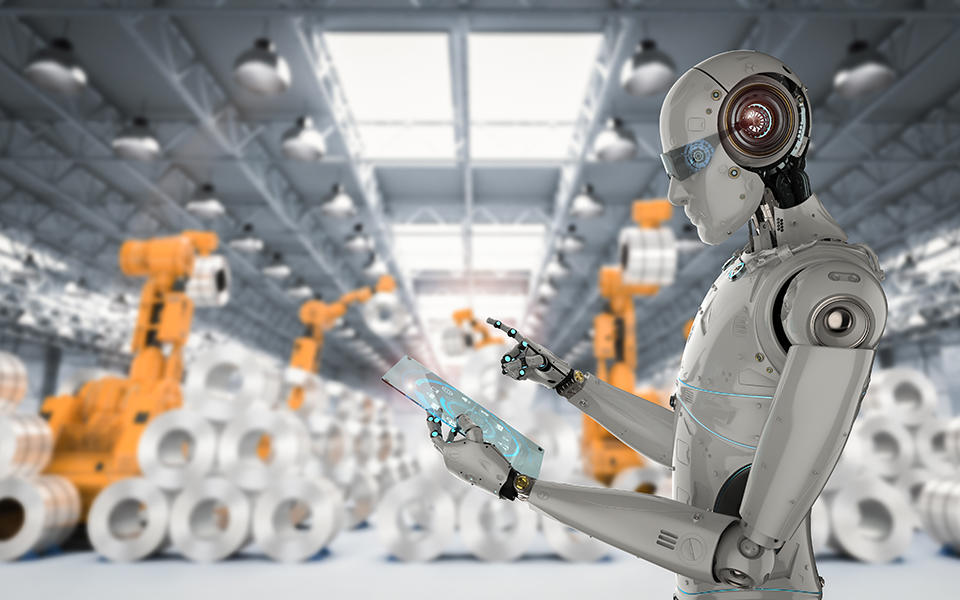
The industrial sector is undergoing its most profound transformation since the dawn of the assembly line, driven by the powerful and pervasive force of Artificial Intelligence (AI). The global Industrial Ai industry represents the vanguard of this new revolution, often dubbed Industry 4.0. It encompasses the application of advanced AI and machine learning techniques to the vast amounts of data generated by industrial machinery, sensors, and operational processes. The goal is to move beyond simple automation to create intelligent, self-aware, and self-optimizing industrial environments. This means using AI to predict machine failures before they happen, to optimize supply chains in real-time, to improve product quality through automated visual inspection, and to enhance worker safety with intelligent monitoring systems. This is not a futuristic concept; it is happening now, with AI being deployed across manufacturing, energy, logistics, and automotive sectors to drive unprecedented gains in efficiency, productivity, and resilience. Industrial AI is fundamentally changing the way things are made, moved, and maintained, heralding a new era of intelligent, data-driven manufacturing.
The Core Technologies Powering Industrial AI
The Industrial AI market is built upon a sophisticated stack of interconnected technologies. At the foundation is the Industrial Internet of Things (IIoT), a vast network of sensors, cameras, and connected devices embedded in machinery and throughout the factory floor. These IIoT devices generate a constant stream of real-time data about temperature, vibration, pressure, and operational status. This massive dataset is the lifeblood of Industrial AI. The next layer is edge and cloud computing. Edge computing involves processing data directly on or near the device where it is generated, which is critical for low-latency applications like real-time quality control. Cloud computing provides the massive, scalable processing power and storage needed to train complex machine learning models on vast historical datasets. The core of the technology stack is the AI and machine learning algorithms themselves. This includes techniques like deep learning for computer vision, predictive modeling for forecasting, and reinforcement learning for process optimization. When combined, these technologies create a powerful feedback loop: IIoT sensors collect data, edge/cloud platforms process it, and AI algorithms analyze it to generate insights that are then used to optimize the physical industrial process.
A Spectrum of High-Impact Applications
The applications of Industrial AI are vast and are delivering tangible value across the entire industrial value chain. Predictive Maintenance is one of the most prominent and high-impact use cases. By analyzing data from sensors on a piece of machinery, AI models can predict when a part is likely to fail, allowing maintenance to be scheduled proactively. This minimizes unplanned downtime, which can save manufacturers millions of dollars. Quality Control is another major application area. AI-powered computer vision systems can inspect products on an assembly line with superhuman speed and accuracy, identifying microscopic defects that a human inspector might miss. This dramatically reduces waste and improves final product quality. In logistics and supply chain management, AI is used to optimize routing, forecast demand with greater accuracy, and manage inventory levels in real-time. In the energy sector, AI helps to optimize power grid operations and predict demand for electricity. Generative AI is even being used in the design phase to create optimized product designs and factory layouts. Each of these applications demonstrates how AI is moving from a theoretical concept to a practical tool for solving real-world industrial challenges.
The Key Players in the Industrial AI Ecosystem
The Industrial AI ecosystem is a complex and collaborative environment populated by several key types of players. The large industrial automation and manufacturing giants, such as Siemens, General Electric (GE), Rockwell Automation, and Schneider Electric, are at the forefront. They are integrating AI capabilities directly into their existing industrial control systems, software platforms (like digital twins), and hardware. The major cloud hyperscalers—Amazon Web Services (AWS), Microsoft Azure, and Google Cloud—are another dominant force. They provide the foundational cloud infrastructure and a suite of powerful, pre-built AI/ML services and tools that make it easier for industrial companies to develop and deploy their own AI solutions. A vibrant ecosystem of specialized AI software startups and scale-ups is also a critical component. These agile companies often focus on solving a specific industrial problem, such as AI for visual inspection or predictive maintenance for a particular type of machinery, offering deep domain expertise. Finally, the end-users—the manufacturing, energy, and logistics companies themselves—are increasingly building their own internal data science and AI teams to leverage this technology and drive their own digital transformation initiatives.
Explore More Like This in Our Regional Reports:
 Spanish
 English
 Arabic
 French
 Portuguese
 Deutsch
 Turkish
 Dutch
Dutch
 Italiano
 Russian
 Romaian
 Portuguese (Brazil)
 Greek
Greek