


Kilt Accessories That Complete the Look (Without Overdoing It)
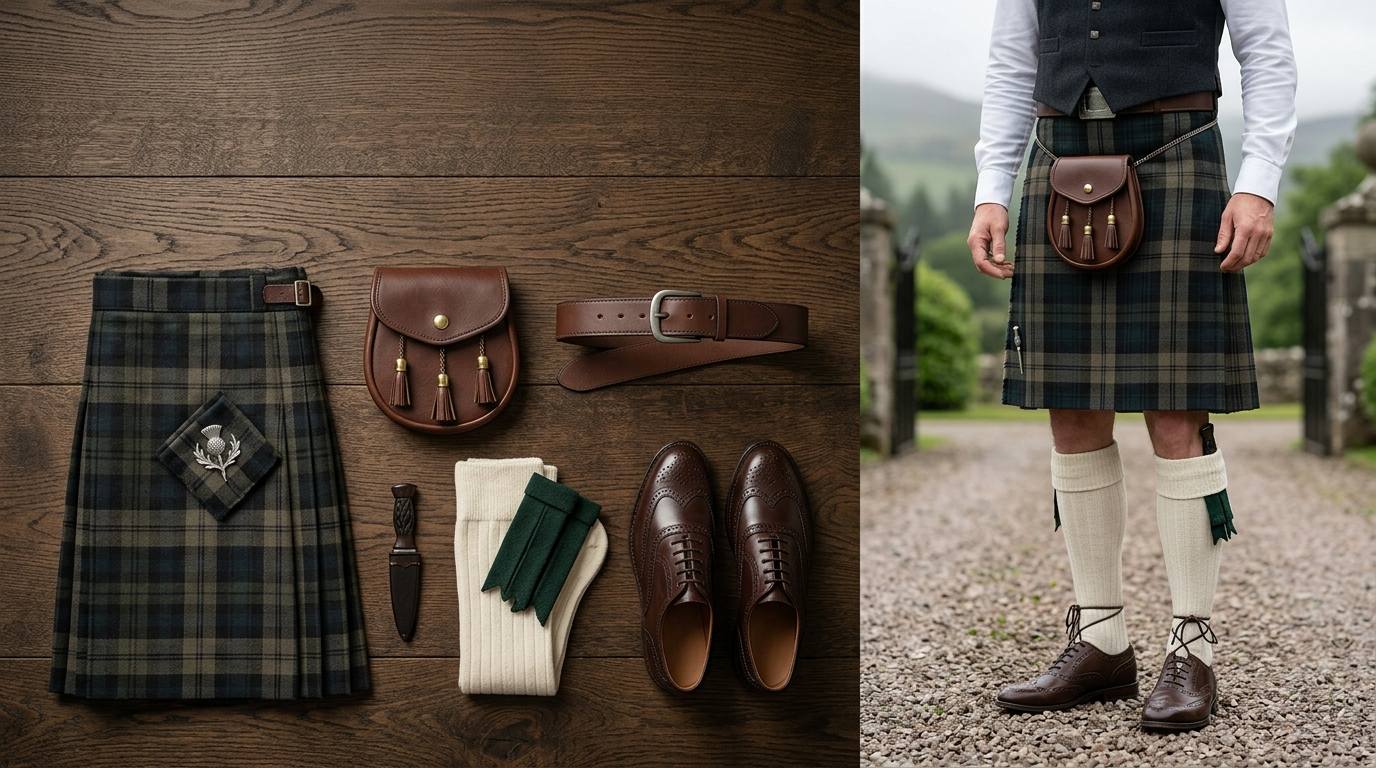
You buy a sharp kilt, then bury it under too many accessories until the whole look turns busy. Overdone styling reads as costume rather than confidence. That misstep keeps a good kilt from getting worn. The fix is choosing a few pieces that work together. This guide covers the accessories that complete a kilt without tipping into excess.
The Role of Accessories
Accessories finish a kilt outfit and signal its formality. The right pieces pull the whole look together.
The wrong pieces, or too many, drag the outfit toward costume. Restraint keeps the kilt as the centerpiece. A few well-chosen items beat a cluttered collection every time.
Think of accessories as punctuation. A few marks clarify a sentence, while too many confuse it. The same logic applies to an outfit.
Quality shows in the small pieces. A well-made belt or pin lifts the whole look. Cheap extras drag it down.
Choosing the Right Belt
A quality belt anchors the kilt at the waist and adds a clean line. Pick leather that matches the formality of the kilt.
Keep the width proportional to the garment. A bulky belt overwhelms a sharp kilt. Match the buckle metal to your other hardware for a consistent look.
A belt also affects comfort. The right width sits cleanly without digging in. Comfort and appearance improve together with a proper fit.
Leather quality shows over time. A well-made belt ages better and holds its shape. Spend a little more for a piece that lasts.
Sporrans and Pouches
A sporran adds function and tradition. It holds small items the kilt cannot.
Choose a style that fits the occasion. A simple leather pouch suits casual wear, while a dressier sporran fits formal events. The range of kilts for men pairs naturally with sporrans across both settings.
A sporran also balances the front of the outfit. It adds visual weight where the kilt needs it. That balance completes the silhouette.
A sporran also adds daily function. It holds keys and a phone close. The piece earns its place through use, not just style.
Pins and Brooches
A kilt pin adds a small, deliberate detail. It also helps the fabric hang correctly.
Keep it understated for daily wear and slightly dressier for formal events. One pin is enough, since more than that clutters the look. Let the pin accent the kilt rather than compete with it.
Placement affects the look too. Set the pin where it accents the fabric naturally. A thoughtful spot beats a random one.
One deliberate pin signals care. It shows attention without shouting for attention. That balance reads as confidence.
Footwear That Matches the Tone
Footwear sets the formality of the whole outfit. Boots lean rugged, while clean dress shoes lift the look.
Match the shoe to the setting and the kilt fabric. A casual kilt pairs with boots or low sneakers. A formal kilt calls for polished footwear that completes the tone.
Color coordination matters here too. Match leather shoes to your belt for a clean look. Consistency ties the outfit together.
Keep two reliable pairs on hand. One rugged, one polished covers most settings. That simple split dresses any kilt up or down.
Accessorizing a Traditional Kilt
Traditional and full-length styles call for considered accessories. A sturdy belt and a secure pin hold everything in place.
Keep the pieces consistent with the formal tone of the garment. Function guides the choices, since these accessories do real work. The range of great kilts pairs best with equally considered details.
Matching Metals and Materials
Consistency ties an outfit together. Settle on one metal tone for your buckle, pin, and any hardware.
Coordinate leather tones across your belt, sporran, and shoes. Mismatched materials stand out for the wrong reasons. A unified palette reads as intentional and sharp.
Pick your palette before you shop for extras. A set tone guides every later choice. Planning avoids a drawer of mismatched pieces.
Knowing When to Stop
More accessories rarely improve a kilt outfit. Each added piece risks tipping into excess.
Pick the few items that serve a purpose and skip the rest. A belt, a pin, and the right shoes often cover everything. Restraint is what separates a confident look from a costume.
Step back and review before heading out. A quick mirror check reveals an overdone look. Removing one piece often improves the whole.
Confidence carries a simple look. A clean kilt with a few good pieces beats a cluttered one. Let the garment speak for itself.
Building Your Accessory Kit
Start with a versatile belt and a pair of shoes that suit most settings. These two cover the majority of outfits.
Add a sporran and a pin as your needs grow. A small, coordinated kit dresses a kilt up or down with ease. Thoughtful accessories complete the look while keeping the kilt in charge.
Buy quality over quantity. A few well-made pieces outlast a pile of cheap ones. The kit serves you for years rather than seasons.
Add pieces as occasions call for them. A growing kit stays relevant to your real needs. You avoid buying items you never use.
 Portuguese (Brazil)
 English
 Arabic
 French
 Spanish
 Portuguese
 Deutsch
 Turkish
 Dutch
 Italiano
 Russian
 Romaian
 Greek
