


The Foundational Technology of Footfall and Occupancy Analytics
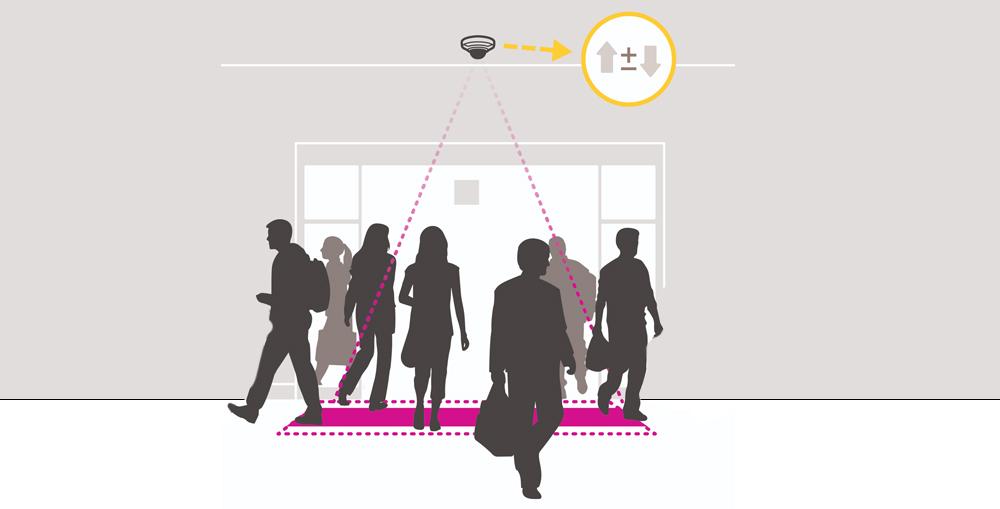
In the modern, data-centric world, the ability to understand and quantify human movement within physical spaces has become a critical component of strategic business operations. A People Counting System is a technological solution comprising hardware and software designed to automatically count the number of individuals entering, exiting, or occupying a specific area. These systems have evolved significantly from simple, break-beam infrared sensors to highly sophisticated technologies like 3D stereoscopic video cameras, which can achieve over 99% accuracy, and thermal imaging sensors that detect human heat signatures while guaranteeing complete anonymity. The fundamental purpose of this technology is to convert the analogue movement of people into digital data, providing organizations with the objective, actionable intelligence needed to optimize staffing, improve layouts, manage energy consumption, and enhance customer experiences. It is the foundational layer upon which the entire "analytics of things" for physical spaces is built, empowering decision-makers with clarity and precision.
Nowhere is the impact of this technology more evident than in the retail sector. In the fierce battle between brick-and-mortar stores and e-commerce, people counting systems provide physical retailers with the analytical tools to compete. By accurately measuring footfall, store managers can calculate one of the most crucial retail metrics: the customer conversion rate—the percentage of visitors who make a purchase. This single KPI allows for the objective evaluation of store performance, marketing campaign effectiveness, and staff efficiency. Furthermore, by analyzing traffic patterns throughout the day, week, or season, retailers can optimize staff scheduling to match customer demand, ensuring better service during peak hours and reducing labor costs during lulls. The data also informs decisions on store layout and product placement, helping to guide customers through the store more effectively and maximize exposure to high-margin items, ultimately driving higher sales and profitability.
Beyond the aisles of retail, people counting systems are indispensable for the safe and efficient management of public venues and transportation networks. In the world's busiest airports and train stations, this technology is mission-critical for monitoring passenger density, managing queue lengths at security and check-in, and preventing dangerous overcrowding on platforms. This real-time data enables operators to dynamically allocate resources, open additional service lanes, and direct passenger flow to less congested areas, significantly improving the travel experience and operational throughput. Similarly, stadiums, museums, theaters, and exhibition halls rely on accurate occupancy data to comply with stringent health and safety regulations, a capability that became paramount during the global pandemic for managing social distancing. In these environments, the technology transitions from a business optimization tool to an essential instrument of public safety and crowd control.
The ultimate power of a people counting system is unlocked through its software and analytics capabilities. The hardware sensors are merely the data collection points; the real value is created in the cloud-based platforms that process, analyze, and visualize this information. Modern analytics dashboards transform raw footfall numbers into intuitive charts, graphs, and heatmaps that reveal trends and patterns at a glance. Users can compare the performance of multiple locations, correlate footfall with external factors like weather or local events, and generate automated reports for stakeholders. Advanced systems go even further, providing insights into dwell times, customer journeys, and queue abandonment rates. This evolution from simply "counting" people to deeply "understanding" their behavior within a space is what makes the technology a transformative strategic asset for any organization that operates in the physical world.
- Monuments historiques
- Restaurant Traditionnel
- Ausbildung
- Mode
- Formation
- Information
- Restaurant
- culture
- تسويق
- Tourisme
- سياحة
- تنمية
- Découverte
- Art
- Causes
- Crafts
- Dance
- Drinks
- Film
- Fitness
- Food
- Spiele
- Gardening
- Health
- Home
- Literature
- Music
- Networking
- Other
- Party
- Religion
- Shopping
- Sports
- Theater
- Wellness
 Deutsch
 English
 Arabic
 French
 Spanish
 Portuguese
 Turkish
 Dutch
Dutch
 Italiano
 Russian
 Romaian
 Portuguese (Brazil)
 Greek
Greek