


Islamic Clothing Market Size and Industry Share Report - 2032
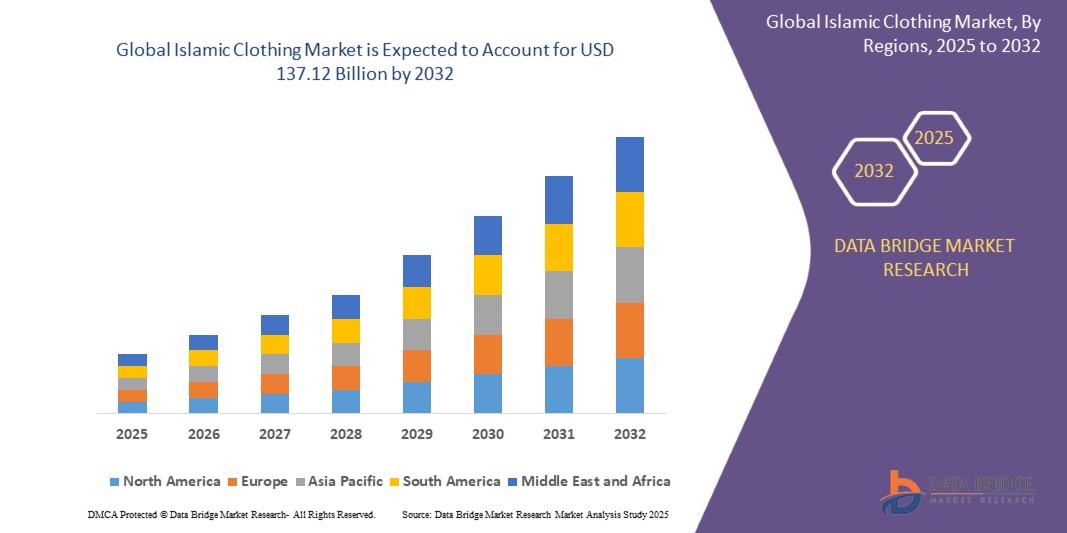
According to the latest report published by Data Bridge Market Research, the Islamic Clothing Market size is projected to reach USD 137.12 Billion by 2032, exhibiting a CAGR of 5.70% during the forecast period 2025 - 2032.
A number of aspects that are kept into view while creating an outstanding Islamic Clothing Market report include the market type, organization size, availability on-premises, end-users’ organization type, and the availability in areas such as North America, South America, Europe, Asia-Pacific and Middle East & Africa. The market size, revenue generated from the sales and technologies by various application segments are also evaluated in this business report. The credible Islamic Clothing Market report showcases the trends that are in vogue, the regions that are growing, the various types of products available and the potential of the industry to provide solutions for a large population.
Stay informed with our latest keyword market research covering strategies, innovations, and forecasts. Download full report: https://www.databridgemarketresearch.com/reports/global-islamic-clothing-market
Islamic Clothing Market Segmentation and Market Companies
Segments
- On the basis of type, the Islamic clothing market can be segmented into hijab, kandura, abaya, thawb, dishdasha, and others.
- Based on distribution channel, the market can be categorized as online stores, offline stores, and others.
- In terms of demographics, the market segments include men, women, and children.
- Geographically, the market is divided into regions such as North America, Europe, Asia-Pacific, South America, and Middle East & Africa.
With the rising influence of social media, there has been a significant increase in the demand for Islamic clothing among the millennial population. This demographic segment is known for its fashion-conscious approach, which has led to a surge in the popularity of Islamic attire such as trendy hijabs, modern abayas, and stylish kanduras. Additionally, the growing number of online stores specializing in Islamic fashion has made it easier for consumers to access a wide variety of clothing options from the comfort of their homes.
Market Players
- Artizara
- East Essence
- SHUKR Islamic Clothing
- Modanisa
- Al-Hijaab
- Aab
- The Hijab Company
- Muslima Wear
- Silk Route Clothing
- Dar-us-Salam Publications
These market players are actively involved in product innovation, strategic partnerships, and acquisitions to gain a competitive edge in the global Islamic clothing market. For instance, collaborations with fashion influencers and celebrities have helped brands like Modanisa and East Essence increase their brand visibility and attract a larger customer base. Furthermore, the emphasis on sustainability and ethical sourcing practices by companies like SHUKR Islamic Clothing and Aab has resonated well with environmentally conscious consumers, thereby enhancing their brand reputation.
The global Islamic clothing market is poised for substantial growth in the coming years, driven by factors such as increasing disposable income among Muslim consumers, changing fashion trends, and a growing awareness of modest fashion. The market players mentioned above are well-positioned to capitalize on these opportunities and expand their market presence through strategic initiatives. With the digitalization of retail and e-commerce platforms, the accessibility of Islamic clothing to a global audience has never been easier, fueling the market growth further.
The global Islamic clothing market is witnessing a shift towards a more inclusive and diverse representation of Muslim fashion. The acceptance and celebration of cultural diversity are driving the demand for Islamic attire beyond traditional markets, paving the way for a more mainstream presence of modest fashion. This evolution is evident in the emergence of new market players that cater to niche segments within the Islamic clothing industry. With a focus on customization, sustainability, and inclusivity, these brands are redefining the boundaries of Islamic fashion and appealing to a wider audience.
One of the key trends shaping the market is the fusion of traditional Islamic garments with contemporary designs and styles. This blending of cultural heritage with modern aesthetics has resonated well with consumers seeking a balance between modesty and fashion-forwardness. As a result, we are witnessing a proliferation of innovative designs, patterns, and colors in Islamic clothing, catering to diverse tastes and preferences. This trend is not only driving sales but also challenging stereotypes and fostering a more nuanced understanding of Muslim fashion within the global fashion landscape.
Moreover, the increasing emphasis on sustainability and ethical sourcing practices is influencing consumer behavior and purchase decisions in the Islamic clothing market. Consumers, particularly the younger demographic, are becoming more conscious of the environmental and social impact of their fashion choices. As a response, market players are incorporating eco-friendly materials, reducing waste in production processes, and promoting fair labor practices to align with the values of their target audience. This shift towards sustainability is not only a reflection of changing consumer preferences but also a strategic move towards building brand loyalty and reputation in an increasingly competitive market environment.
Another significant development in the Islamic clothing market is the growing focus on inclusive sizing and representation. Recognizing the diversity of body types and cultural backgrounds among Muslim consumers, brands are expanding their size ranges and featuring a more diverse range of models in their marketing campaigns. This commitment to inclusivity is not only a step towards greater representation but also a business imperative to cater to the varied needs and preferences of a global customer base. By embracing diversity in all its forms, market players can foster a sense of belonging and connection with their audience, ultimately strengthening brand loyalty and engagement.
In conclusion, the global Islamic clothing market is undergoing a transformative period marked by innovation, sustainability, inclusivity, and diversity. As consumer expectations evolve and market dynamics continue to shift, brands that can adapt to these changes and embrace the principles of authenticity, creativity, and social responsibility will be well-positioned to thrive in this dynamic and vibrant industry. The future of Islamic fashion lies in its ability to challenge conventions, inspire cultural dialogue, and celebrate the rich tapestry of Muslim heritage in a contemporary and inclusive manner.The global Islamic clothing market is currently experiencing a shift towards more inclusive and diverse representation of Muslim fashion. This trend is being largely driven by the acceptance and celebration of cultural diversity, leading to an increased demand for Islamic attire in mainstream fashion markets. Market players are responding to this shift by focusing on customization, sustainability, and inclusivity, thereby redefining the boundaries of Islamic fashion to appeal to a wider audience. The fusion of traditional Islamic garments with contemporary designs and styles is a key trend shaping the market, resonating well with consumers seeking a balance between modesty and fashion-forwardness.
Moreover, there is a growing emphasis on sustainability and ethical sourcing practices within the Islamic clothing market. Consumers, particularly the younger demographic, are becoming increasingly conscious of the environmental and social impact of their fashion choices. In response, market players are incorporating eco-friendly materials, reducing waste in production processes, and promoting fair labor practices to align with the values of their target audience. This shift towards sustainability not only reflects changing consumer preferences but also serves as a strategic move to build brand loyalty and reputation in an increasingly competitive market environment.
Another notable development in the market is the focus on inclusive sizing and representation. Brands are recognizing the diversity of body types and cultural backgrounds among Muslim consumers, leading to the expansion of size ranges and featuring a more diverse range of models in marketing campaigns. This commitment to inclusivity is essential not only for greater representation but also as a business imperative to cater to the varied needs and preferences of a global customer base. By embracing diversity in all its forms, market players can foster a sense of belonging and connection with their audience, ultimately strengthening brand loyalty and engagement.
In conclusion, the global Islamic clothing market is undergoing a transformative period characterized by innovation, sustainability, inclusivity, and diversity. Brands that can adapt to these changes and embrace authenticity, creativity, and social responsibility are well-positioned to thrive in this dynamic and vibrant industry. The future of Islamic fashion lies in its ability to challenge conventions, inspire cultural dialogue, and celebrate the rich tapestry of Muslim heritage in a contemporary and inclusive manner.
Frequently Asked Questions About This Report
What is the PESTLE analysis for the global Islamic Clothing Market industry?
What is the projected impact of autonomous shipping on Islamic Clothing Market margins?
How is the Islamic Clothing Market expected to change by 2033?
What is the projected valuation for the in the Islamic Clothing Market by 2033?
Which technology segment had the highest valuation in the Islamic Clothing Market in 2025?
What are the disruptive technologies expected to emerge in the Islamic Clothing Market?
How is the Buy Local trend impacting the Islamic Clothing Market in Australia?
What is the influence of social media on Islamic Clothing Market demand?
What are the primary offensive strategies in the Islamic Clothing Market?
How does product-level segmentation impact the overall Islamic Clothing Market CAGR?
What was the historical growth rate of the Islamic Clothing Market over the last five years?
How is the Islamic Clothing Market life cycle different in emerging markets?
Browse More Reports:
Global AI Microservices (NIM) Market
Global Stem Cell and Progenitor Cell-based Therapeutics Market
Global Farm and Garden Equipment Market
Global Hitter Based Hand Tools Market
Global Aortic Coarctation Market
Global Pulp Moulding Machines Market
Global Circulating Tumor Cells (CTC) Liquid Biopsy Market
Global Bladder Cancer Therapeutics Market
Global Dark Fiber Networks Market
Global Student Information System Market
Global Automotive Natural Gas Vehicle Market
Global In-Vivo Imaging Market
Global Granuloma Inguinale Market
Global Soil Moisture Sensor Market
Global Dielectric Etchers Market
Contact Us:
Data Bridge Market Research
US: +1 315 716 2465
UK: +44 121 387 1739
APAC : +656 2026 606
Email:- [email protected]
- Monuments historiques
- Restaurant Traditionnel
- Formazione
- Mode
- Formation
- Information
- Restaurant
- culture
- تسويق
- Tourisme
- سياحة
- تنمية
- Découverte
- Art
- Causes
- Crafts
- Dance
- Drinks
- Film
- Fitness
- Food
- Giochi
- Gardening
- Health
- Home
- Literature
- Music
- Networking
- Altre informazioni
- Party
- Religion
- Shopping
- Sports
- Theater
- Wellness
 Italiano
 English
 Arabic
 French
 Spanish
 Portuguese
 Deutsch
 Turkish
 Dutch
 Russian
 Romaian
 Portuguese (Brazil)
 Greek
