


Full-Stack Observability Services for Proactive IT Issue Resolution
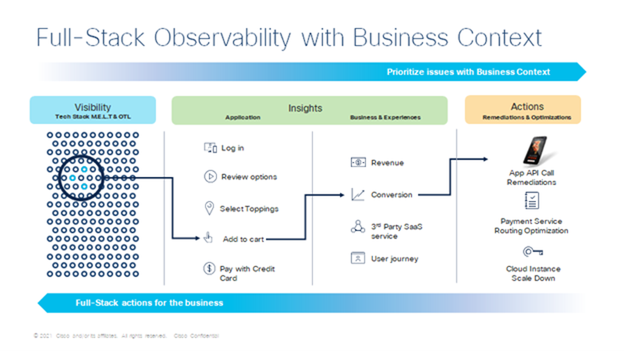
In today’s fast-paced digital environment, businesses increasingly rely on complex, multi-layered technology infrastructures to deliver seamless user experiences. Full-stack observability services have emerged as a critical solution for organizations seeking comprehensive visibility into their entire technology stack. Unlike traditional monitoring tools that focus on isolated components, full-stack observability provides end-to-end insights across applications, infrastructure, networks, and user interactions. This holistic approach enables IT teams to detect issues proactively, optimize performance, and maintain business continuity, making it an essential strategy in modern enterprise operations.
At the heart of full-stack observability are several core concepts and components that together provide actionable intelligence. These include metrics, logs, traces, and events, all of which capture data from different layers of the technology environment. Metrics offer quantitative measurements of system performance, logs provide detailed records of events, traces follow the journey of transactions across multiple services, and events capture notable occurrences that may affect performance. By integrating these elements, observability platforms can deliver a unified view that highlights dependencies, bottlenecks, and anomalies, helping organizations pinpoint the root causes of problems quickly. Advanced analytics and artificial intelligence further enhance these capabilities by identifying patterns and predicting potential failures before they impact end users.
Full-stack observability has found applications across a broad range of industries, reflecting its versatility and importance. In finance, observability services help ensure the stability and responsiveness of online banking systems and trading platforms, where downtime or slow performance can have severe consequences. Healthcare providers leverage observability to monitor electronic health records, telemedicine applications, and critical medical devices, ensuring patient safety and regulatory compliance. In e-commerce, organizations use these services to track user behavior, optimize transaction flows, and minimize checkout errors, directly impacting revenue and customer satisfaction. Beyond these sectors, observability also plays a pivotal role in manufacturing, telecommunications, and government services, where uninterrupted digital operations are crucial for efficiency and reliability.
Several factors are driving the growth of full-stack observability services and creating opportunities for innovation. The increasing adoption of cloud-native architectures, microservices, and containerized applications has made traditional monitoring approaches inadequate. Organizations now require solutions that can provide real-time visibility across distributed environments. The emphasis on delivering exceptional digital experiences has also heightened the need for proactive performance management. Furthermore, the integration of artificial intelligence and machine learning into observability platforms is unlocking new possibilities for automated anomaly detection, predictive maintenance, and intelligent alerting, enabling IT teams to focus on strategic improvements rather than firefighting incidents.
Despite these advantages, implementing full-stack observability comes with challenges and limitations. Integrating observability tools across diverse systems and legacy applications can be complex and resource-intensive. The sheer volume of data generated can overwhelm teams if not managed with appropriate storage, analytics, and visualization strategies. Security and privacy concerns also arise when sensitive operational or customer data is monitored and processed. Additionally, ensuring consistent observability across hybrid or multi-cloud environments requires careful planning, standardization, and ongoing governance. Organizations must balance the depth of insight with usability to avoid overwhelming IT staff while maintaining actionable visibility.
Emerging trends in full-stack observability highlight the sector’s rapid evolution and the drive toward smarter, more integrated solutions. There is a growing focus on unified platforms that consolidate monitoring, tracing, and logging into a single interface, simplifying analysis and decision-making. Observability as code is gaining traction, allowing teams to define monitoring and alerting configurations programmatically, improving scalability and consistency. The integration of AI-driven insights, predictive analytics, and automated remediation is also becoming standard, reducing downtime and enhancing operational efficiency. Additionally, user-centric observability, which emphasizes end-user experience and digital journey monitoring, is reshaping how organizations assess the impact of performance issues on business outcomes.
Regional and industry-specific factors also influence the adoption and implementation of full-stack observability services. In technology-driven markets, companies are quick to adopt advanced observability tools to maintain competitive advantage and meet customer expectations. Industries with strict regulatory or compliance requirements, such as finance and healthcare, often prioritize observability to ensure reliability and auditability. Geographically, regions with high cloud adoption and digital transformation initiatives demonstrate faster uptake, while markets with legacy infrastructure may experience gradual integration due to system complexity and cost considerations. Tailoring observability strategies to specific industry needs and regional constraints is critical for achieving maximum effectiveness.
Full-stack observability services are poised to play an even more central role in enterprise IT strategy. As digital ecosystems grow increasingly complex, organizations will rely on these solutions not only for reactive monitoring but as proactive tools for business optimization. Innovations in AI, automation, and unified analytics will enhance predictive capabilities and operational resilience. Companies that effectively leverage full-stack observability will gain a competitive edge by delivering superior digital experiences, reducing downtime, and streamlining IT operations. In conclusion, full-stack observability represents a transformative approach to managing modern technology environments, enabling organizations to anticipate challenges, optimize performance, and thrive in an ever-evolving digital landscape.
Top Trending Reports -
China Data Historian Market Trends
 Portuguese (Brazil)
 English
 Arabic
 French
 Spanish
 Portuguese
 Deutsch
 Turkish
 Dutch
Dutch
 Italiano
 Russian
 Romaian
 Greek
Greek